
"coffee growing environment"
9000 article(s) found
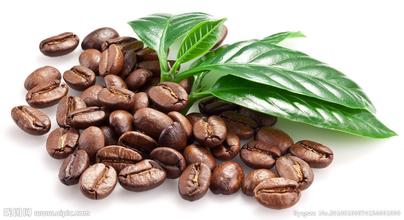
Introduction and Flavor of Robuska Coffee beans describe the taste of growing environment and producing area
Description of the introduction flavor of robusta coffee beans in the growing environment, the output of Robusta species accounts for 25% 35% of coffee bean production, and its main producing country is Indonesia (one of its coffee beans is a kind of coffee beans processed by washing method. It is a hybrid between Robusta and Arabica, and it is the only coffee bean that can be used as a single product in the Chinese market.

Bahia, brazil green gold estate sun beans flavor characteristics? Growing environment and history?
Professional coffee knowledge exchange More coffee bean information Please pay attention to coffee workshop (Weixin Official Accounts cafe_style) Bahia, Brazil Green Gold Manor Sun Bean flavor characteristics? Growing environment and history? [Origin] Brazil [Production] Bahia [Manor] Fazenda Ouro Verde [Variety] Catua Kaduai [Treatment] Pul

Latin American coffee bean characteristics Grinding scale Growing environment Origin flavor characteristics Description
Characteristics of Latin American coffee beans Grinding scale Growing environment Origin flavor characteristics Description The overall flavor of Latin American coffee is known for its balance, and all the flavors in coffee can be found in Latin American coffee. The widespread use of wet processing of green beans is also one of the characteristics of Latin American coffee, good processing also makes its beans larger and more uniform than African coffee, defects

Perennial low temperature coffee growing environment Bolivia coffee producing country
Takesi Manor, drinking water and coffee after harvest treatment, using alpine melting cold snow landscape, so we give her a nickname: Takesi Snow vein Manor; in addition to low temperature, pollution-free environment, fertile and well-drained volcanic soil, is also an element of coffee flavor, although the owner of Agrotakesi SA is rich, but deep respect for nature and the way to get along, but

Mexican Coffee Coffee growing Environment and Coffee Flavor
Although Mexican coffee beans are grown at low latitudes, only less than 40% of coffee beans are grown at high elevations, most of them on flat land, so even though most of the coffee beans are Arabica, commercial beans still account for the majority of production. Mexico's coffee beans are concentrated in several provinces: Oaxaca

The growing environment of Colombian coffee beans
The suitable climate in Colombia provides a real natural pasture for coffee. Coffee trees in Colombia are mainly cultivated in the Andes, on steep slopes about 1300 meters above sea level, where the annual temperature is about 18 degrees Celsius, annual rainfall is 2000 to 3000 millimeters, latitude 1-11 15 north, longitude 72-78 west, and the specific range of elevation can exceed 2.000 meters. By

Sumatran Coffee growing Environment Flavor description introduction to the Grinding scale of varieties
Sumatran coffee growing environment flavor description variety grinding scale Java is the most economically developed island in Indonesia and the most densely populated area. Jakarta, the capital of Indonesia, located in the northwest of Java, is the largest city in Southeast Asia. In addition, Indonesia's second and fourth largest cities are located on the island of Java. Java is the first area in Indonesia to grow coffee.

Description of growing Environment and Flavor of Manning Coffee introduction to Grinding scale of varieties in planting Manor area
Manning coffee growing environment flavor description planting manor area variety grinding scale introduction bean shape is larger, the front is gradually round, the back is round and convex, the crack is straight. Robasta coffee trees are native to Madagascar in central and western Africa and Indonesia in Asia, and account for about 20% to 30% of the world's output. Robasta coffee tree is suitable for planting at an altitude of 500.

Brief introduction of taste grinding scale for coffee bean flavor growing environment in Xipi Waterfall, Uganda
A brief introduction to the taste grinding scale of coffee bean growing environment in Xipi Falls, Uganda in 1931, it was exported to Kenya in obscurity from Geisha Mountain Mountain in southwestern Ethiopia (which happens to be synonymous with Japanese geisha), wandered to Tanzania and Costa Rica, and was transplanted to Panama in the 1960s, and then it took nearly half a century before it became a blockbuster and defeated Chang.

Panama Coffee Coffee growing Environment unique Coffee
Panama Coffee growing Environment Panama is a small country located in the center of the American continent. The waters of the Atlantic and Pacific oceans flood its beaches. Panama is located at 9 degrees north latitude, the meeting point of the Central Mountains, where Mount Baru, one of the highest volcanoes in Central America, is located. The Baru volcano has an altitude of more than 11400 feet, and the land around it is rich in nutrients and fertile

Grinding scale of varieties produced in Sumatran Coffee growing Environment
In Sumatra coffee growing environment, the variety taste treatment method of grinding scale Mantenin coffee beans has large particles and hard beans, and it is easy to have defects in the process of planting, and it is usually subject to strict manual selection after harvest. If the control process is not strict enough, it is easy to cause the quality of the good and the bad to be mixed. In addition, the different degree of baking will also directly affect the taste, so it has become a more controversial single.

Chapas Triumph Manor, Mexico & what is the growing environment and variety of #8231; native forest coffee?
Professional coffee knowledge exchange more coffee bean information please pay attention to the coffee workshop (Wechat official account cafe_style) Mexico Chiapas triumphal manor native forest coffee growing environment and varieties? Coffee origin: Mexico Chiapas, Mexico, planting Manor: triumphant Farmers' Cooperative Coffee varieties: Typica,Bourbon, Mundo Novo planting altitude:

Costa Rican coffee growing environment
This kind of coffee can grow above 1500 meters above sea level. Altitude has always been a problem for coffee growers. The higher the altitude, the better the coffee beans, not only because the higher altitude can increase the acidity of the coffee beans and thus increase the flavor, but also because the night temperature at the higher altitude is lower, which can make the trees grow slowly, thus making the coffee beans have a stronger flavor. In addition, due to the high

Coffee growing Environment in Colombia Coffee Water Distribution Network cleaning
The suitable climate in Colombia provides a real natural pasture for coffee. Coffee trees in Colombia are mainly cultivated in the Andes, on steep slopes about 1300 meters above sea level, where the annual temperature is about 18 degrees Celsius, annual rainfall is 2000 to 3000 millimeters, latitude 1-11 15 north, longitude 72-78 west, and the specific range of elevation can exceed 2.000 meters. By

Introduction to the taste of manor flavor description in aaa growing environment of Kilimanjaro coffee
Qilimanjaro coffee AAA growing environment manor flavor description taste introduction this kind of coffee beans have extraordinary quality, produced in the Mohi district near Mount Kilimanjaro, the mountain area with a height of 3, 000 feet to 6, 000 feet is the most suitable for growing coffee, the fertile volcanic ash gives the coffee here a strong texture and soft acidity. It exudes delicacy.

How the growing environment of Brazilian queen Huang bourbon coffee beans rushes out the flavor of citrus fruits
More information about coffee beans Please follow the coffee workshop (official Wechat account cafe_style) how the growing environment of Brazilian Queen's Yellow Bourbon Coffee beans rushes out of the Citrus Fruit Flavor Manor]: this coffee comes from FazendaRainha (Queen's Manor), which covers an area of 280mu and is located in Vale da Grama, an ancient volcanic valley in Brazil. 2011

Coffee Tree species Segmentation Coffee planting Environment requires in-depth understanding of Coffee
One of the characteristics of a coffee tree is that its fruit can bear fruit several times a year, and another is that flowers and fruits (also known as cherries) coexist at different stages of ripening. The style of the whole coffee industry is influenced by the fickle nature. If the fruit is too ripe, the beans in it will rot. If it is not ripe enough, the beans picked will not ripen by themselves. So bean pickers

Ethiopian coffee with a long aftertaste Description Variety Features Price Growing Environment Introduction
Ethiopia is the birthplace of the famous Arabica coffee bean, and the tradition of harvesting wild coffee beans has been maintained to this day. The coffee garden with an altitude of more than 1500 meters has formed a unique coffee terroir after more than a thousand years of evolution and adaptation. Ethiopian coffee grown in a natural wild environment is called wilderness coffee, retaining the most primitive and natural taste of coffee beans.

Description of Minas Coffee Bean Flavor in Brazil introduction to the growing environment of brands in the region
Brazil Minas Coffee Bean Flavor description Brand growing Environment Brazil is vividly likened to the giant and monarch of the coffee world. There are about 3.97 billion coffee trees there, and small farmers now grow 75% of Brazil's total coffee production. Brazil produces twice or even three times as many coffee as Colombia, which is the second largest coffee producer in the world.

Taste, yield, taste and flavor description of Ugandan coffee growing environment
Taste output of Ugandan coffee taste and flavor description characteristics the growing environment belongs to the basic flavor. It is characterized by chloride, bromide, iodide, nitrate and sulfate solution of potassium and lithium. Mainly from the fungiform papillae on the front edge of the tongue, sour (acidy), mellow (mellow), winey (wine), bland (light) and sharp (sharp) can be sensed.